
Challenge
The Challenge
At Western Governors University, students pursuing teaching degrees are required to apply for Field Experience, a critical milestone where they gain classroom experience under the supervision of a licensed teacher.
After submitting their application, students had little visibility into where they were in the approval process or what to expect next. This lack of transparency created uncertainty for students and resulted in a high volume of status inquiries directed to both the Field Experience team and Student Mentors, consuming valuable staff time that could have been spent supporting students in more meaningful ways.
The Opportunity
Our objective was to create a transparent application tracking experience that gave students clear, real-time visibility into their progress while reducing unnecessary support requests. Success would be measured by improving the student experience, increasing confidence in the process, and lowering the operational burden on internal support teams.
Project Details
My Role: Senior UX Designer
Platform: Web
Team: Project Manager, Engineers, Education Stakeholders
Project Field: Field Experience Student Management
Outcomes
The application status experience reduced Field Experience-related communications to staff and Student Mentors by 78%, giving students greater confidence in the application process while allowing support teams to spend more time helping students with higher-value needs rather than responding to routine status requests.
Wireframes
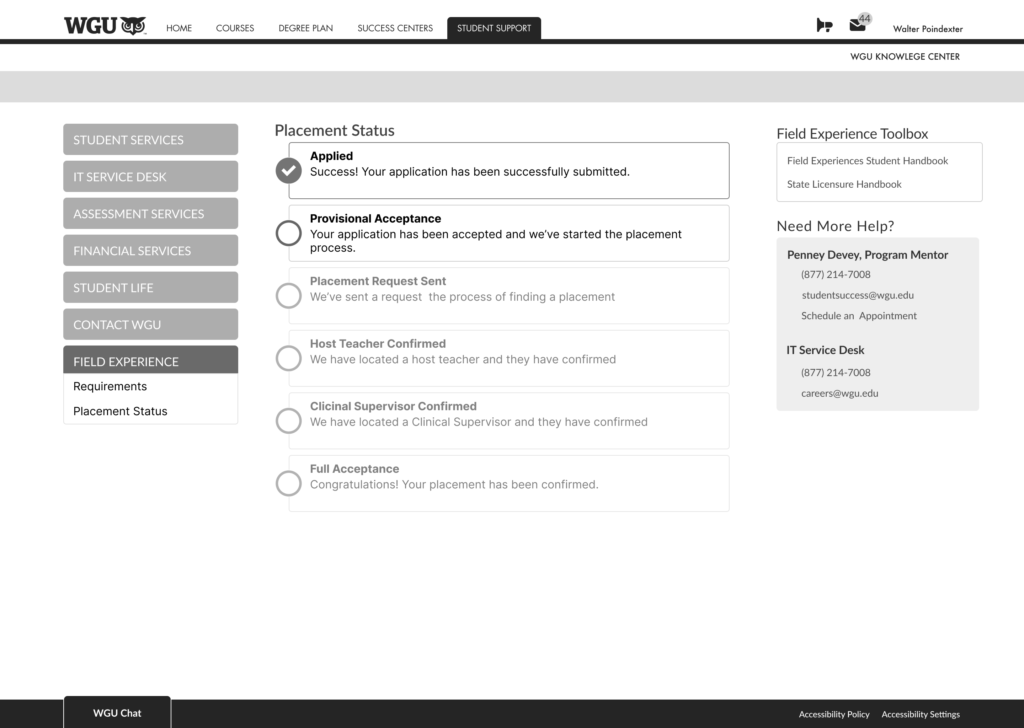
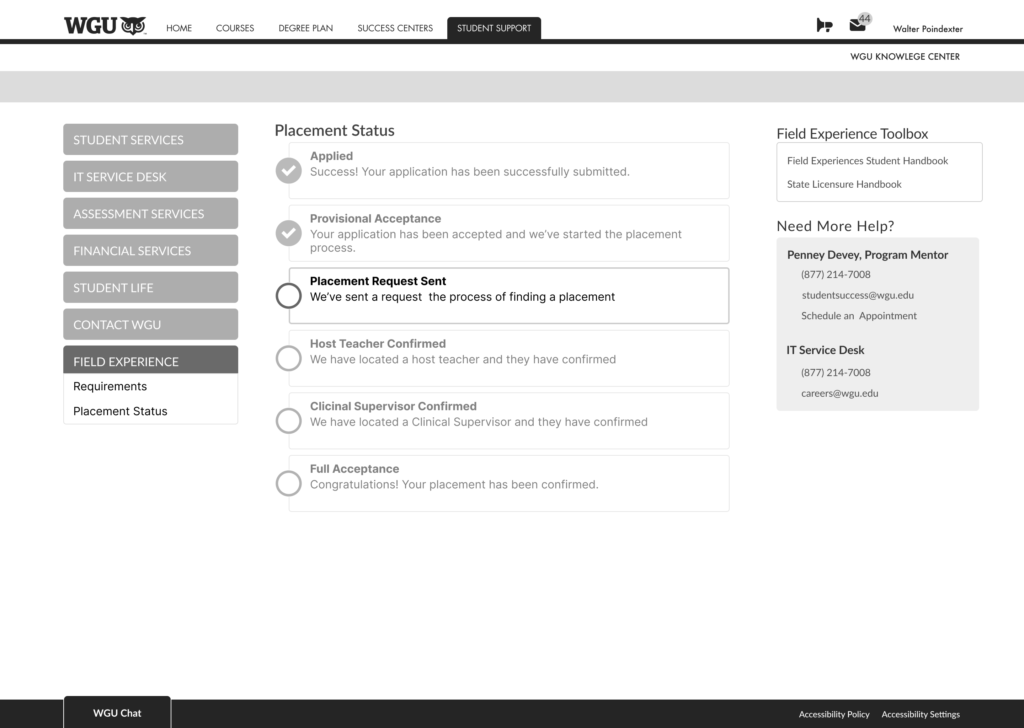
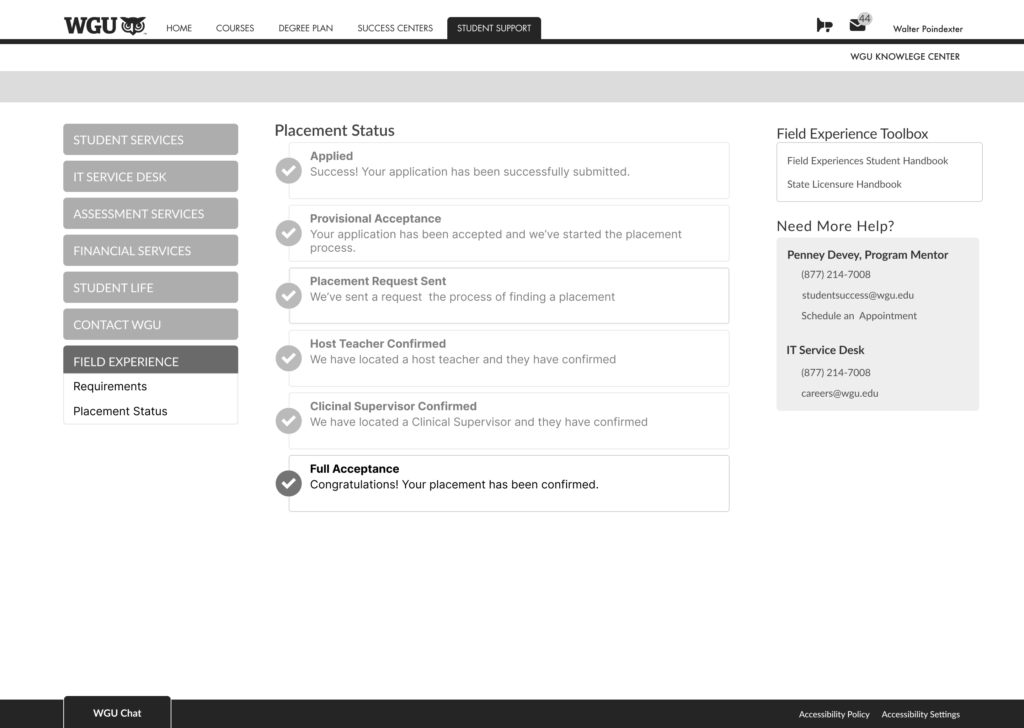
Before exploring interface solutions, I worked closely with Field Experience stakeholders to map the end-to-end application process. Although the team understood the workflow operationally, the student-facing experience had never been clearly defined. Through a series of collaborative working sessions, we identified the stages that were meaningful for students to track and distinguished them from internal administrative steps that could remain behind the scenes.
With the workflow established, I created low-fidelity wireframes to explore how progress could be communicated in a way that was simple, transparent, and scalable. Multiple concepts were evaluated before narrowing the direction presented to stakeholders, focusing on reducing uncertainty while keeping the experience easy to understand.
To ensure consistency across the platform, I also reviewed existing UX patterns with the design team. Finding no established solution for this type of experience, I designed a new interaction pattern that could serve as the foundation for similar status-tracking experiences across other student journeys.
High Fidelity Designs
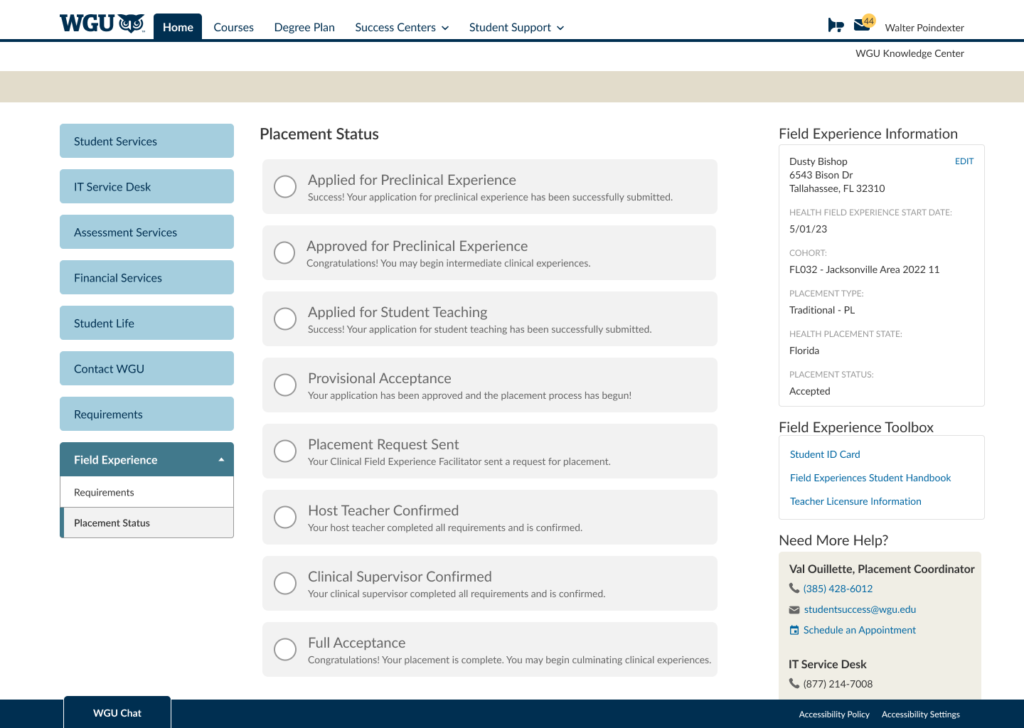
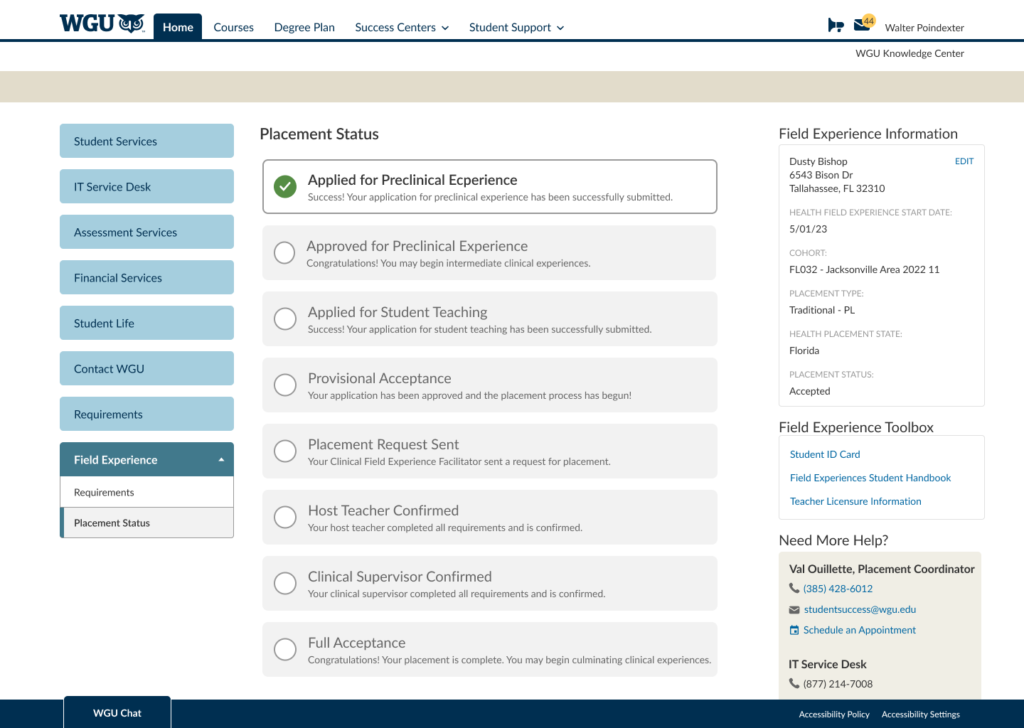
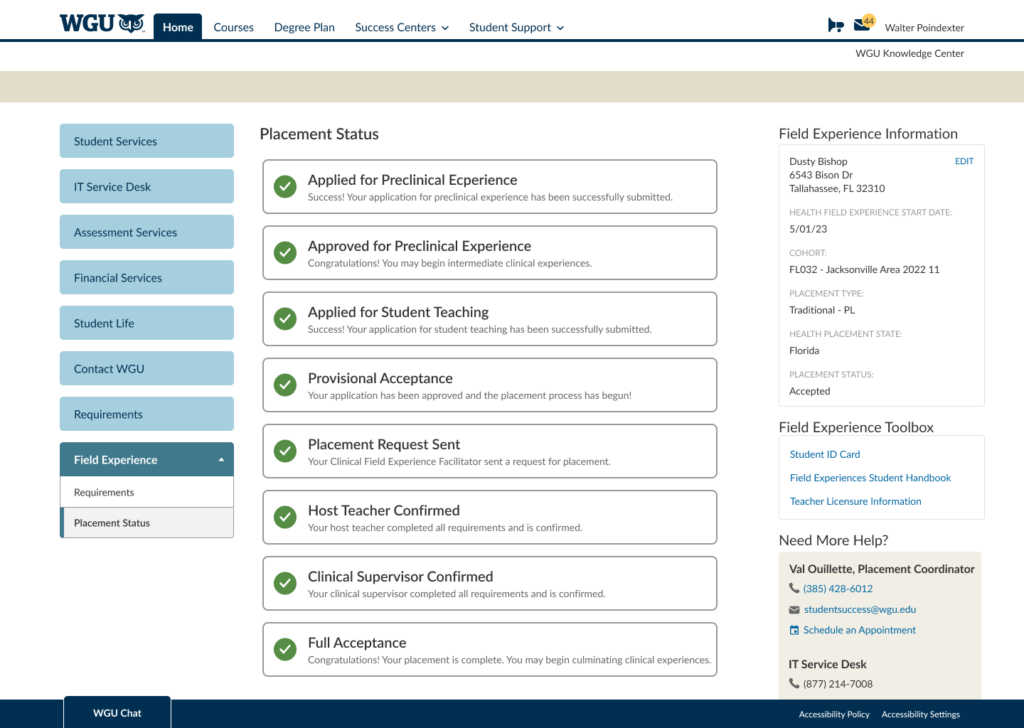
Once the workflow and interaction model were validated, I partnered with our UI Designer to translate the experience into high-fidelity designs that aligned with WGU’s design system and visual language. This collaboration ensured the new feature felt like a natural extension of the existing student experience while maintaining accessibility and consistency across the platform.
As the designs evolved, I worked closely with Field Experience stakeholders to refine the language presented at each stage of the application. Together, we simplified complex process terminology into clear, student-friendly messaging that set expectations and reduced uncertainty throughout the journey.
The final experience transformed a previously opaque process into one that gave students meaningful, real-time visibility into their application status while providing a scalable foundation for similar tracking experiences in the future.


